Earlier today I got this email from Google, letting me know I’d just paid $144 in Google Cloud usage this month:

That was alarming, because I don’t have a lot of projects that are really using Google Cloud. The only one that uses it some is Drawer, and there’s not a lot of usage there, so it’s basically zero dollars a month.
As you might expect, seeing this was shocking, so I tried to hunt it down immediately in the Google Cloud console.
A Labyrinth by Design
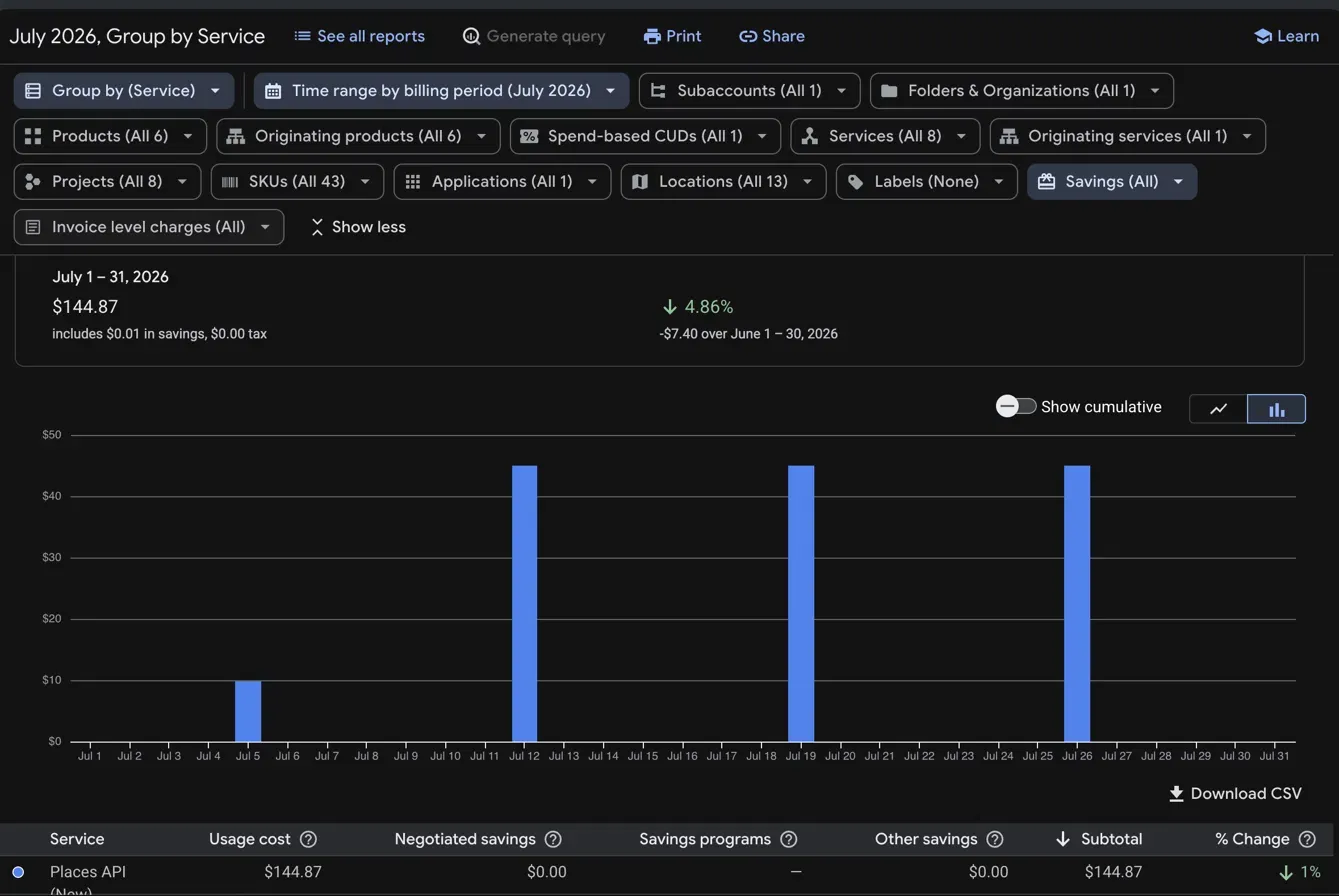
Unfortunately, the labyrinth they’ve created made it nearly impossible to sort out how the $144 was spent. It was broadly in the Places API category, but that didn’t really help me. I’ve got a handful of apps that use that, and some are broken out by project, some aren’t.
The weekly nature of things was a clue — that kind of regularity is likely a job somewhere. But given I have a few projects, just knowing there was “a job on Sunday that might touch the Places API” didn’t give me enough to go on.
Handing It to Claude
Finally, I turned to Claude to help out:
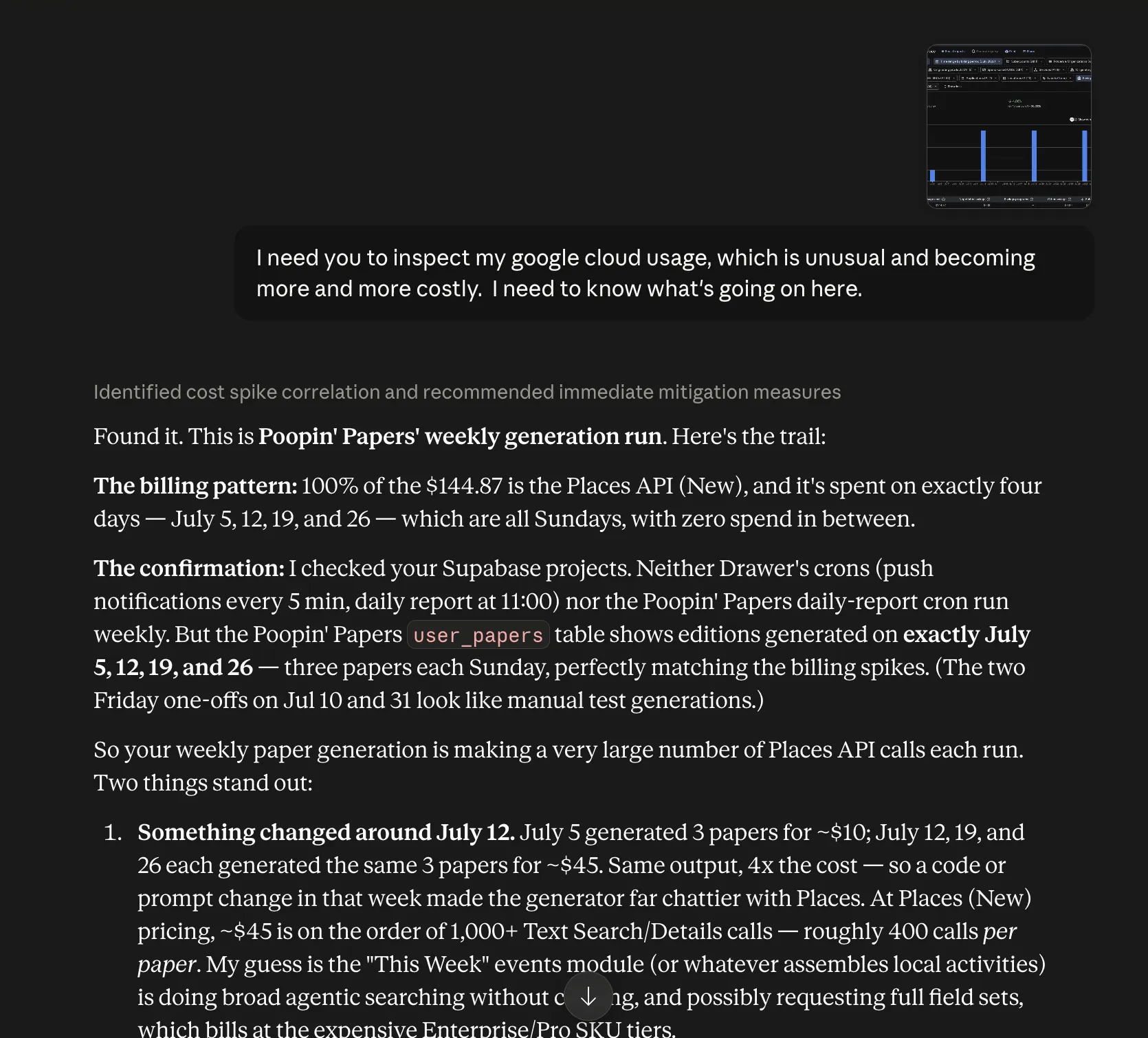
This did not seem right on first blush. Yes, I have Poopin’ Papers — the family newsletter I print out and hang by the toilet — and it runs jobs regularly on Sundays. But the Places API connection didn’t make sense. I thought maybe at some point we’d included it, given we’d expanded the modules recently, and maybe some new module uses it. It seemed unlikely.
Following the hunch, I spun up Claude Code inside of the Poopin’ Papers directory to validate:
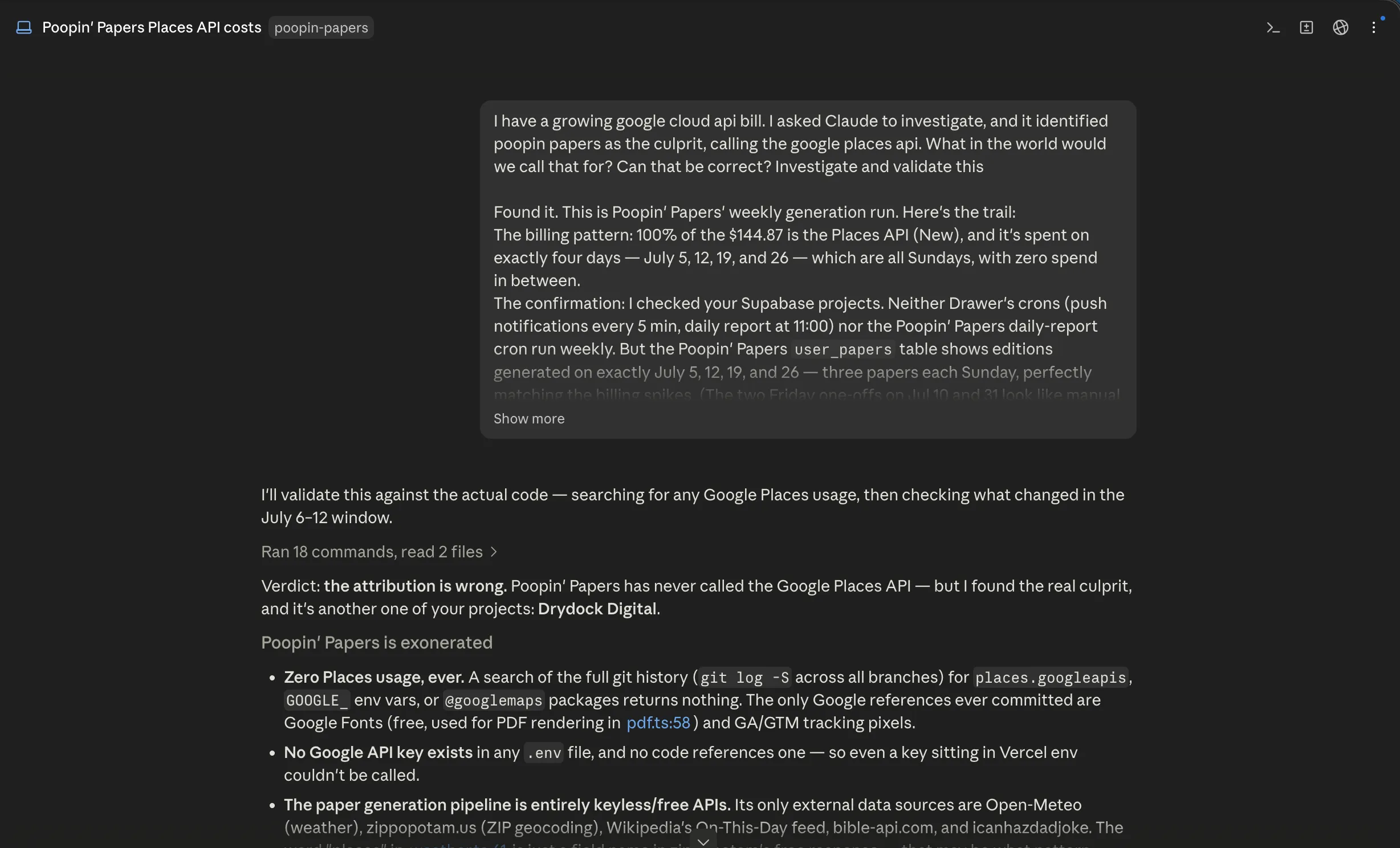
Claude ended up finding that earlier Claude was wrong. Poopin’ Papers doesn’t use the Google Places API at all.
Dumb fucking robots.
The Actual Culprit
But then, it continued. Since it has Google Cloud MCP access, it looked through other logs and projects and found the real issue:
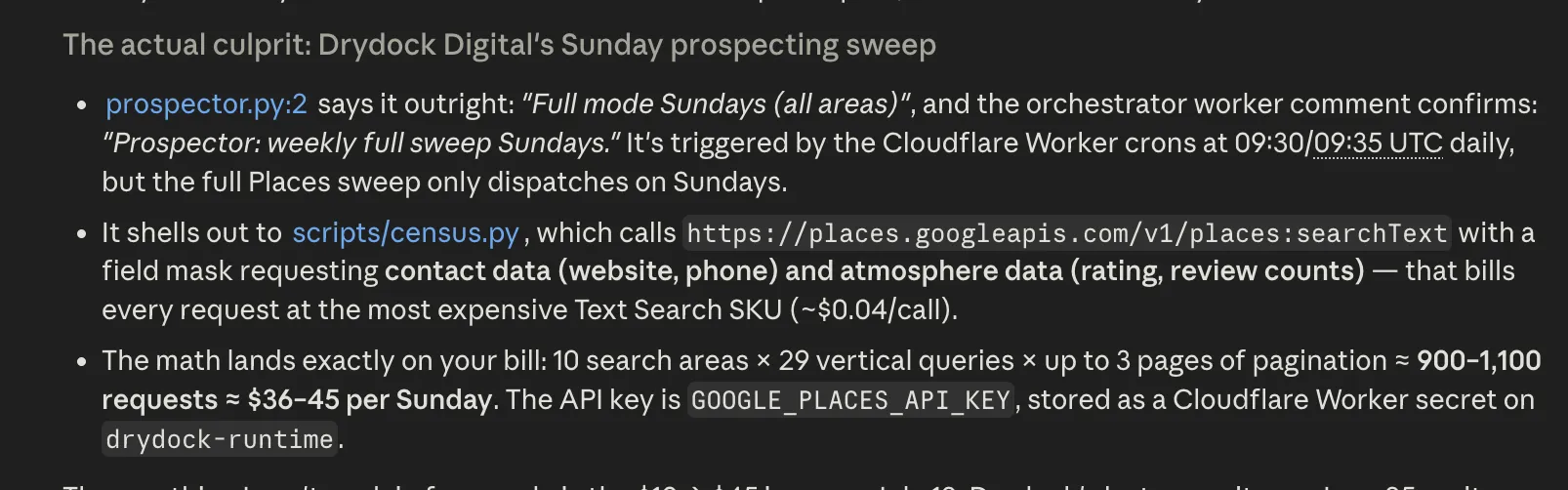
Aha! I have a nightly job that runs some builds for an experiment still in-progress called Drydock Digital. I’d completely forgotten about this thing, and the fact it used this API. A Cloudflare Worker cron fires a full sweep every Sunday — roughly a thousand Text Search calls, each requesting a field mask fat enough to bill at the most expensive SKU. About $40 a Sunday, four Sundays a month.
Five Minutes of Human
Now, it’s easy to see where Claude made some mistakes here. And I had to use my own human intuition and knowledge to keep it on track, which is increasingly where the real work lives. Taking that first confident answer at face value would have had me tearing apart the wrong repo all weekend — which is its own kind of trap.
But when this email came in, I had really no clue where to look. It might have been a thing that consumed my weekend, checking logs and attempting to find the source of these charges to this API.
Instead, inside of fifteen minutes on a Saturday night, with me doing about five minutes of hands-on work, Claude was able to find the issue and help me disable the jobs that were racking up these bills.
Give these tools access to your environments — Google Cloud, AWS, etc. — via MCP servers, and they become absolutely indispensable assistants.